Mario
Hola, soy Mario 👋

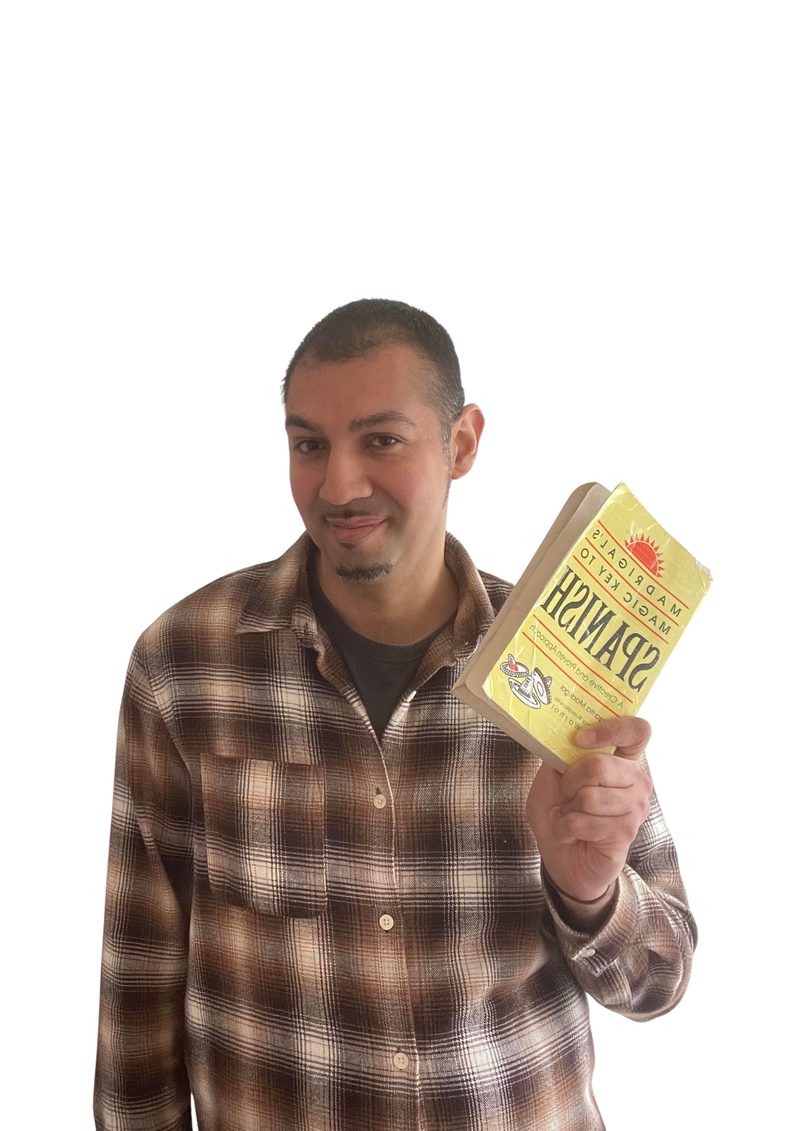
I teach Spanish. Mostly by talking a lot and not caring if you mess up. No verb charts as a personality test. No pretending I have it all figured out. Just real conversation, built around whatever you're actually trying to get out of this.

— Mario

Honestly, I didn't plan any of this. I just kept noticing that moment when someone understands a joke in a language they weren't born into — you can see it on their face, right before they laugh. I got kind of obsessed with causing that moment on purpose.

After enough classes with enough different people, I started noticing a pattern: it was never the "naturally gifted" students who actually stuck with it. It was the ones with a real reason — a trip booked, a partner's family, a job that needed it. So now I just ask people why they're here, and I build the class around that instead of around a textbook.

That's really it. I'm not trying to sell you on some big transformation. I just think Spanish is more useful as a tool than as a subject you studied once and forgot.
Four things every class is built on

01

We talk first, explain later

You're speaking Spanish in lesson one, badly, and that's fine. Grammar shows up after, as "here's why that sentence worked," not as a gate you have to pass first.

02

I'll ask what you actually care about

Football, your partner's mom, a work email you're dreading writing — whatever it is, that's what we use. If it's boring to you, it's not going to stick anyway.

03

You're going to say things wrong, a lot

I'm not going to jump in and correct every word. If I stopped you every time, you'd stop talking. We fix patterns, not every single sentence.

04

You're an adult, so I teach you like one

You don't need flashcards and a gold star. You can handle "here's the actual reason this rule exists" — and honestly, that sticks better than repetition anyway.

"I'm not trying to get you fluent by next week. I just don't want you still saying 'someday' six months from now."

— MARIO